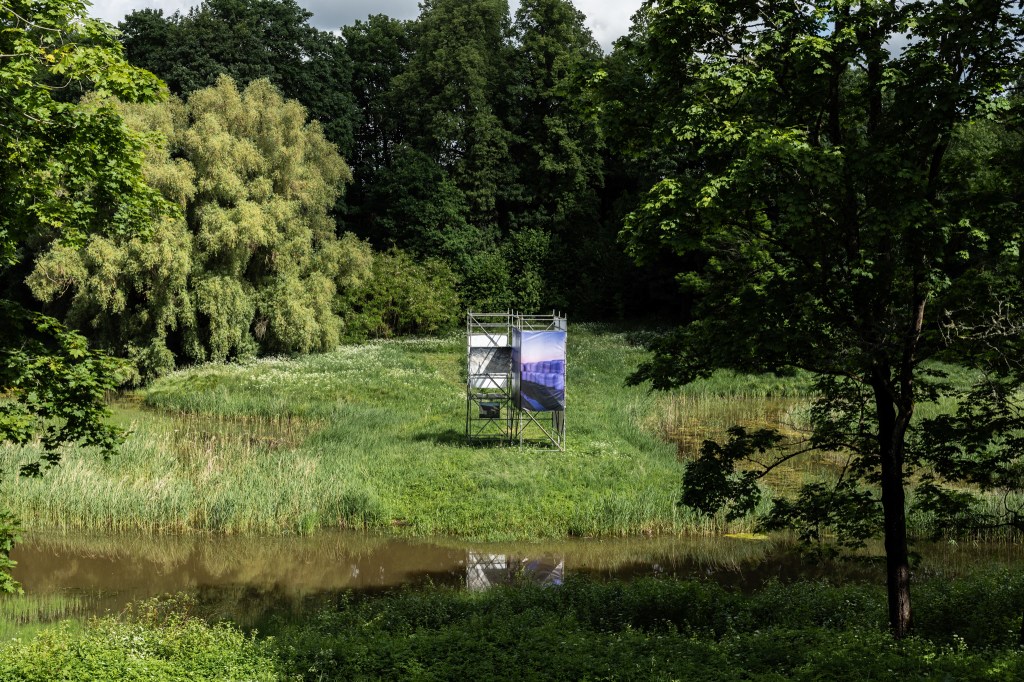
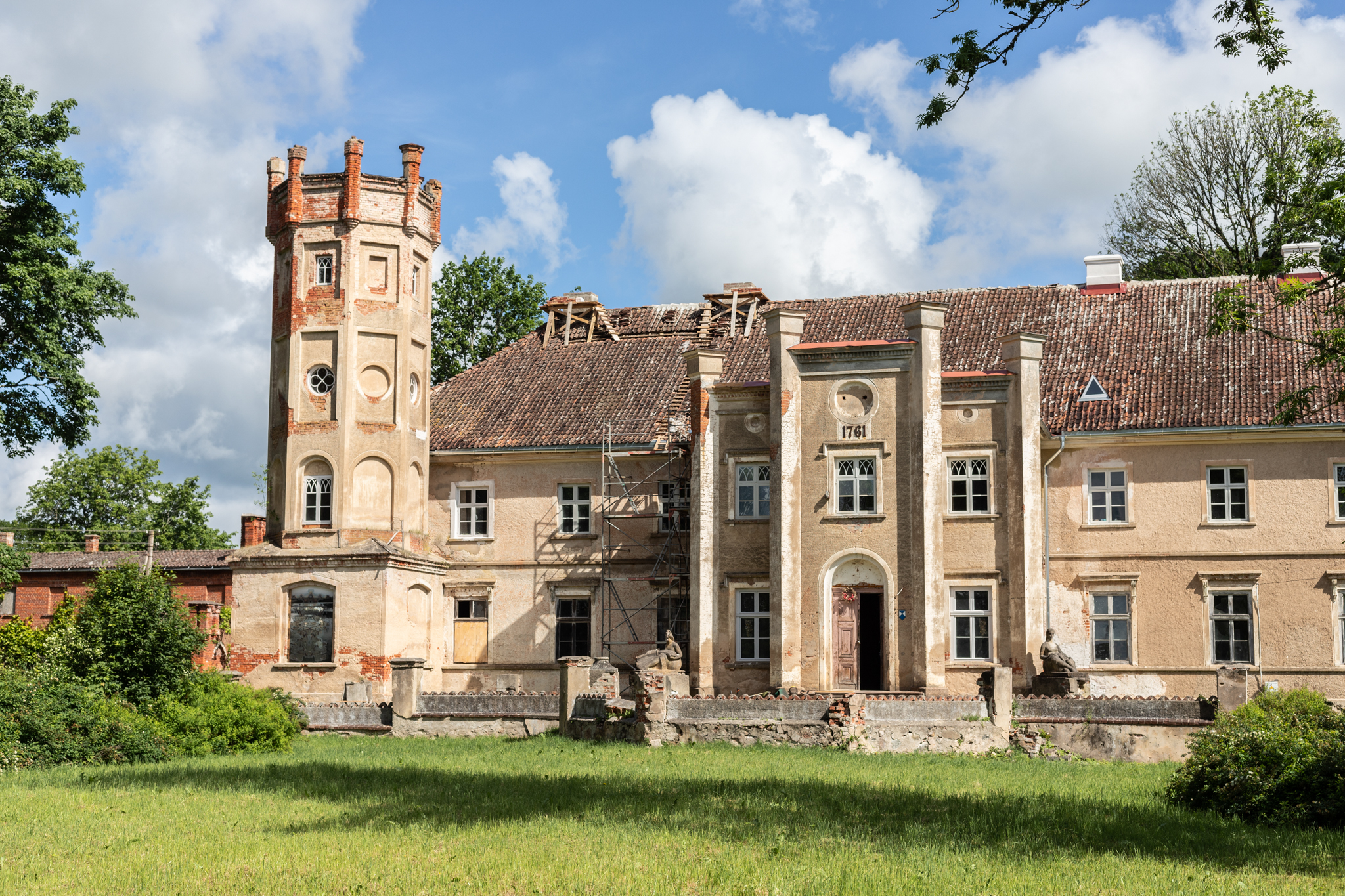
Pēteris Vīksna, “Fields”, 2025 at Šķēde manor watermill pound island on Šķēde river, Saldus municipality, Latvia
‘ainavā’ in Cultural and Historical Sites, Saldus Municipality, Western Latvia
Agate Tūna, Pēteris Vīksna, Līga Stibe, Annemarija Gulbe
31 May–26 July 2026
Curated by Annemarija Gulbe
The project is based on photographic documentation of the landscape and explores its potential transformation, addressing technological, ecological and agricultural aspects in the context of current wind farm development plans in Saldus Municipality. By encouraging interest in these changes and their impact on the perception of landscape, the project invites a dialogue between local perspectives and views from outside, placing the observed environments within newly created site-specific installations. These are locally rooted realities operating within a global space.
Latvia currently has no unified national regulatory framework for landscape assessment, planning, management and use. The determination of a landscape’s value therefore remains highly subjective, shaped by personal attitudes, associations, living environments and cultural references. However, certain landscape qualities are collectively and regionally recognised as beautiful, picturesque and valuable.
The Environmental Impact Assessment for the Vārme Wind Farm, prepared by Estonian, Latvian & Lithuanian Environment in 2025, states that landscapes widely recognised by the public as having high scenic value include popular and frequently visited locations, elevated panoramic viewpoints, landscapes with a high degree of naturalness, views containing notable features, and views of historical, cultural or spiritual significance. Other factors include the rarity or uniqueness of a view, the integrity of the landscape’s character and a strong sense of place. The assessment concludes that the landscape surrounding the planned Vārme Wind Farm is visually attractive. At the same time, the proposed wind turbines will become its dominant vertical elements, and their introduction may create a certain degree of disruption or disharmony in the perception of the landscape, thereby reducing the visual comfort of the area.
In his essay The Inappropriable, Giorgio Agamben suggests that one of the earliest expressions of a sense of landscape can be found in Petrarch’s letter describing his ascent of Mont Ventoux, undertaken solely out of a desire to see what such a great height might reveal and to experience the pleasure of contemplating the landscape from above. Agamben also refers to an observation made by ethologists: animals sometimes climb to elevated places and survey the surrounding landscape for no apparent reason.
In Saldus Municipality, situated between uplands in the central part of Kurzeme, the landscape is relatively flat. To contemplate it from above, one must either climb an observation tower or look down into one of the relatively shallow river valleys. As the economically systematised agricultural landscape dominates here, we observe the arrangements of cultivated fields from a distance.
The prospect of turbines entering this landscape evokes a sense of the unheimlich: a German term describing something new and unfamiliar that is initially perceived negatively. Public meetings on energy infrastructure projects reveal criticism intertwined with a fear of change and anxiety about its possible consequences, which may threaten a familiar way of life that is already being transformed into an object of nostalgia.
The Thai architect Boonserm Premthada has said that there are two kinds of memory. The first consists of experiences people have had in the past; the second is the memory of the present, formed in the space they occupy at a particular moment. At times, these two can connect, and their encounter can generate new memories. Perception is the mind.
Looking back creates a desire to continue perceiving the present and the future in relation to what has been accepted and familiar in the past. Yet the environment is neither fixed nor static, and groups of 250-metre-high turbines, with the rotation of their blades, will inevitably establish a distinct spatial presence.
During this period of unhurried anticipation, lingering in a present that will soon become the past, intensified and hypersensitive sensory and emotional relationships with the environment are formed. How do we relate to our surroundings, to our bodies in space and to the elements that affect our senses? If the environment contains an unlimited variety of relationships and possibilities, what kind of experience do we seek to create through the positions we adopt?
Observing the visible, identifying viewpoints, mapping, recording, developing, and allowing impressions to settle into layers of memory: must every possible configuration be registered and archived? Every familiar view is continually rearranging and rewriting itself. It disappears the moment we shift our position, however slightly, and alter our relationship to the image framed by perception.
The Dutch architect Anne Holtrop has said that there is no single view, but rather a sequence of impressions that gradually produces an understanding of space. Within this process of transformation, the gaze scans three-dimensionally, constructing its own paths along landscape trajectories. The territory between the vertical dominants will become an in-between space, a spatial threshold. The relationship between the observer’s body and their sensitivity to scale and dimensions, to height and form, directs both movement and vision. Juhani Pallasmaa, the Finnish architect, architectural theorist and phenomenologist, argues that the sense of scale is not visual but bodily and tactile. It is the way in which, through my own body, I relate myself to the entirety of a space.
Is it possible to organise an environment democratically? The idea that diverse elements might coexist harmoniously within a landscape shaped by ever-changing wind directions appears almost impossible. Nevertheless, the desire to reach a compromise remains.
The filmmaker and architectural researcher Louise Lemoine argues that space exists within a particular framework and is organised, yet as we move through it with relative freedom, we position ourselves somewhere within it. By choosing a particular position, we generate particular consequences.
Could this deliberate positioning of ourselves, this choice of favourable coordinates and perspectives, be precisely what is needed to shape a harmonious landscape of coexistence?
Does observing and exchanging views bring us closer to understanding? Perhaps it is about learning to remain open and sensitive, and to attune ourselves to changing environments.
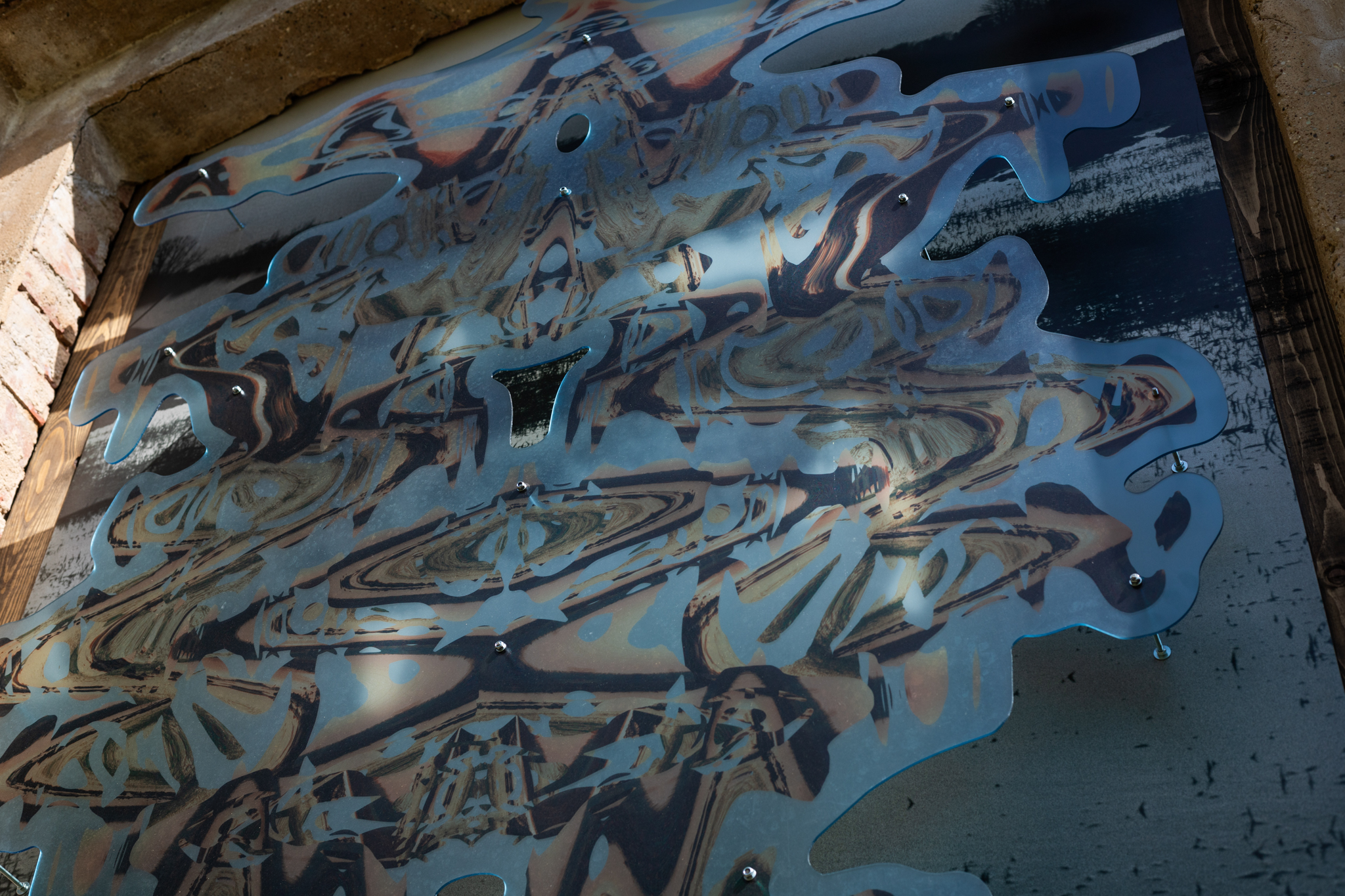
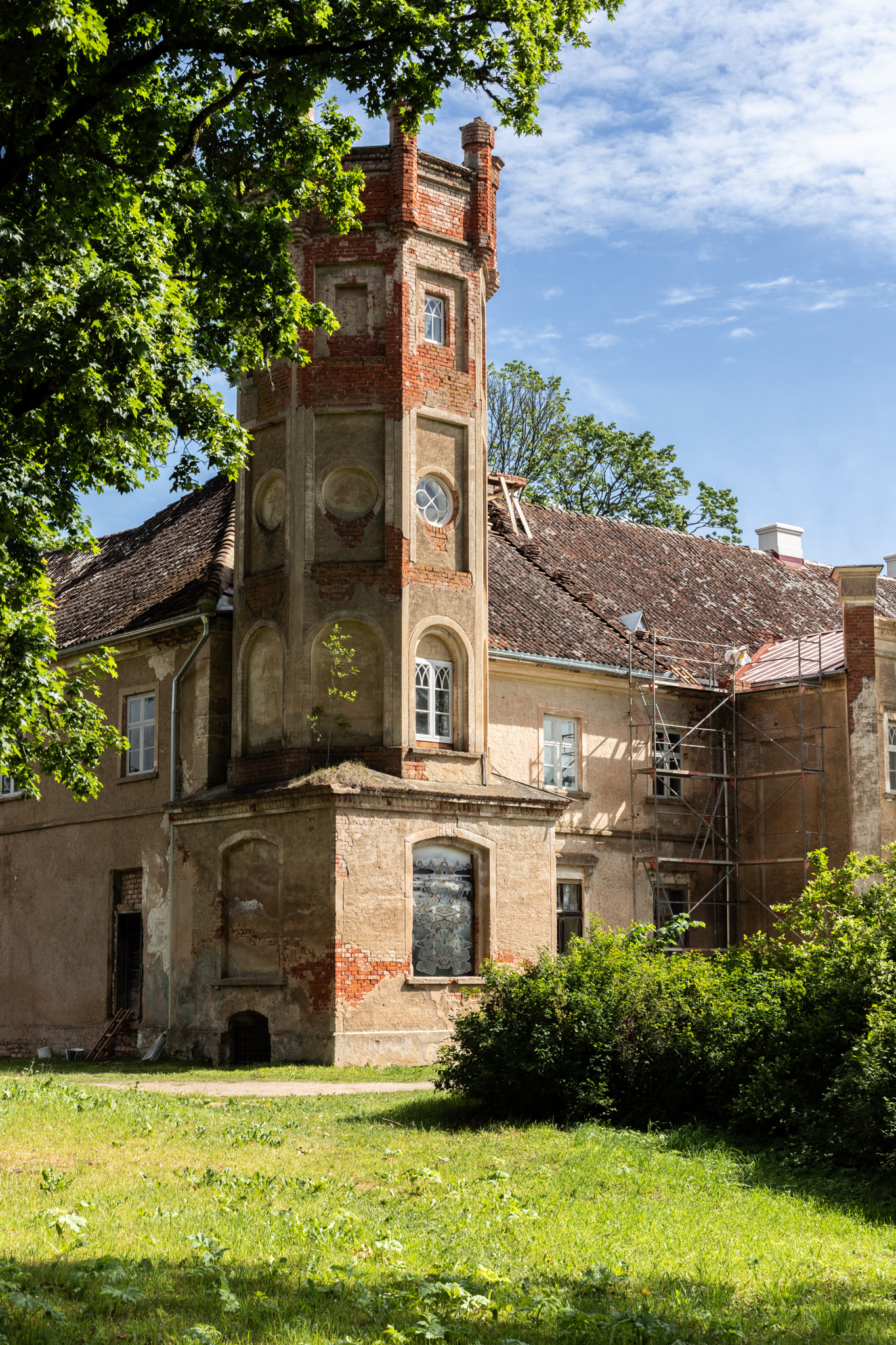
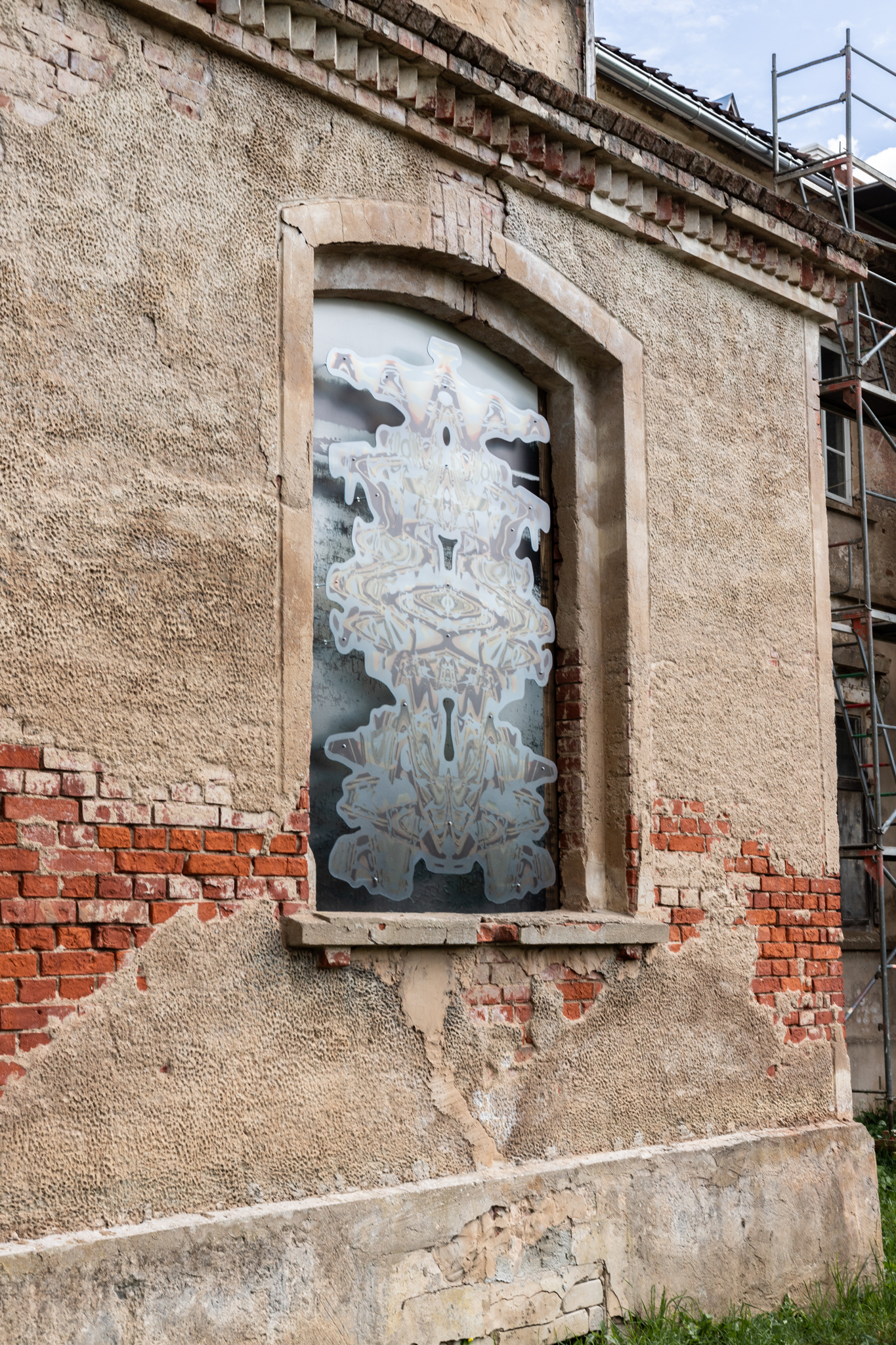
Agate Tūna ‘Viewpoint’
Analogue photography, digital print on Neobond and acrylic, 2026
In the first-floor window of the tower at Šķēde Manor
56.852469, 22.385216
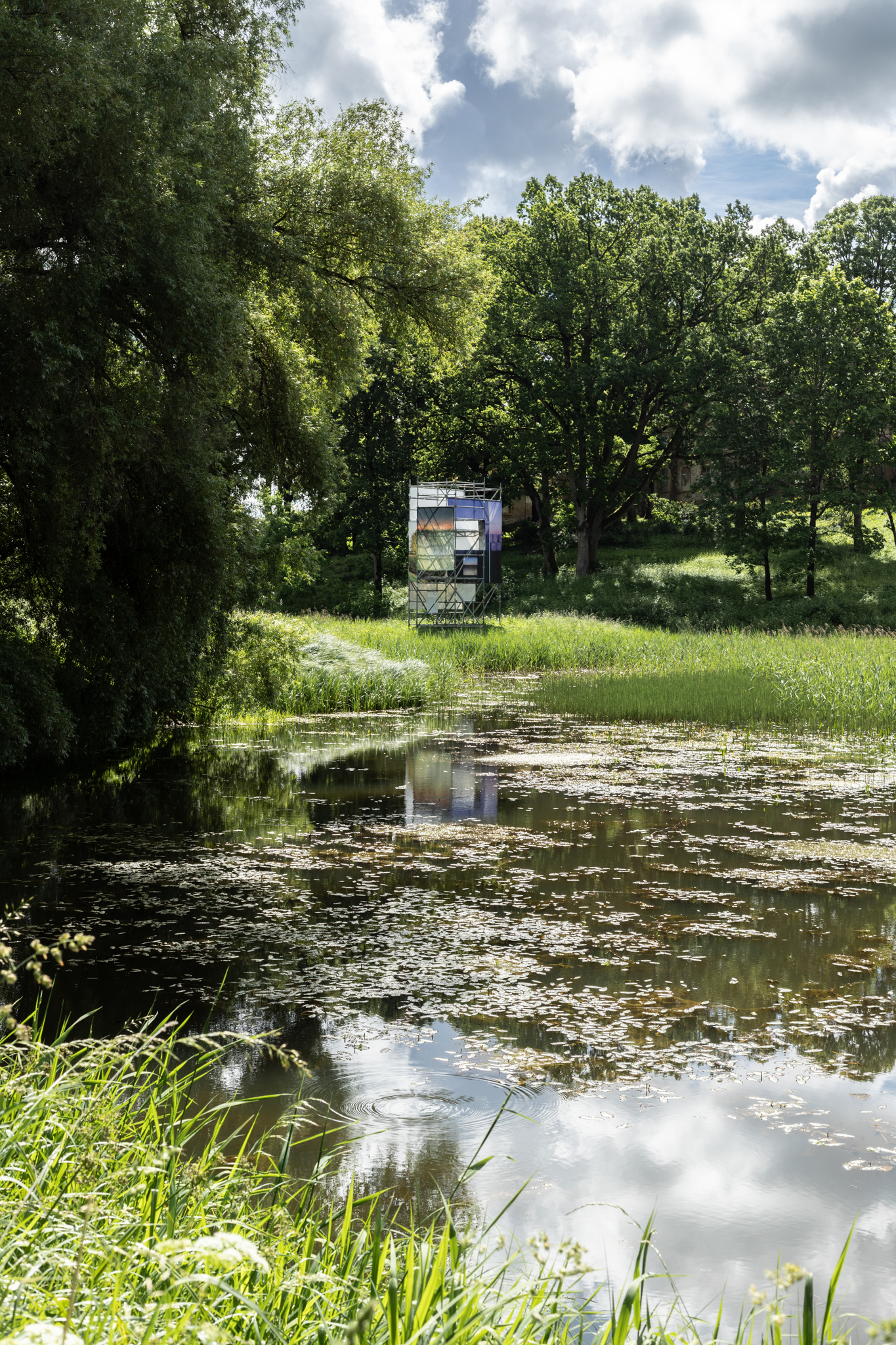
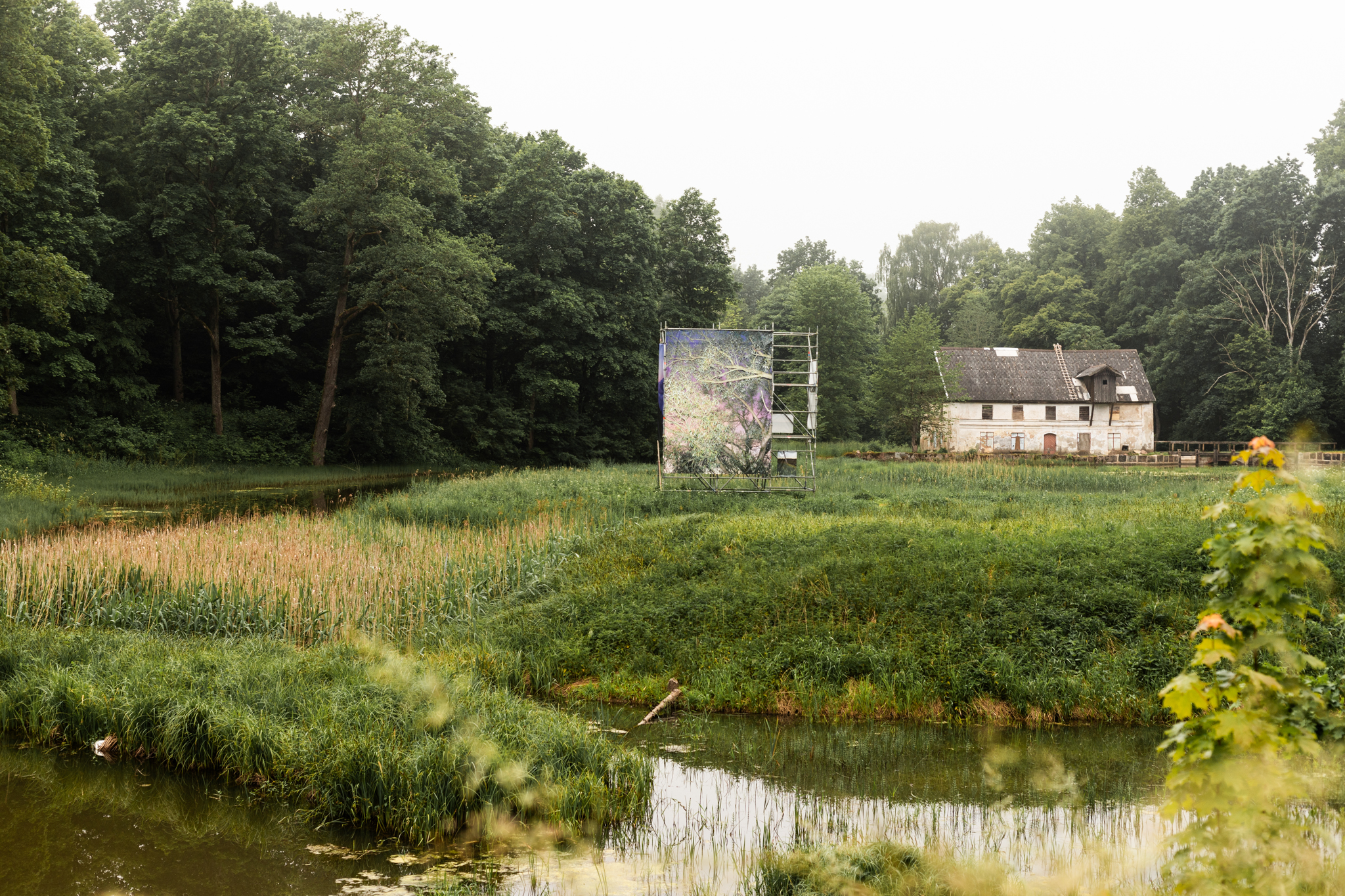
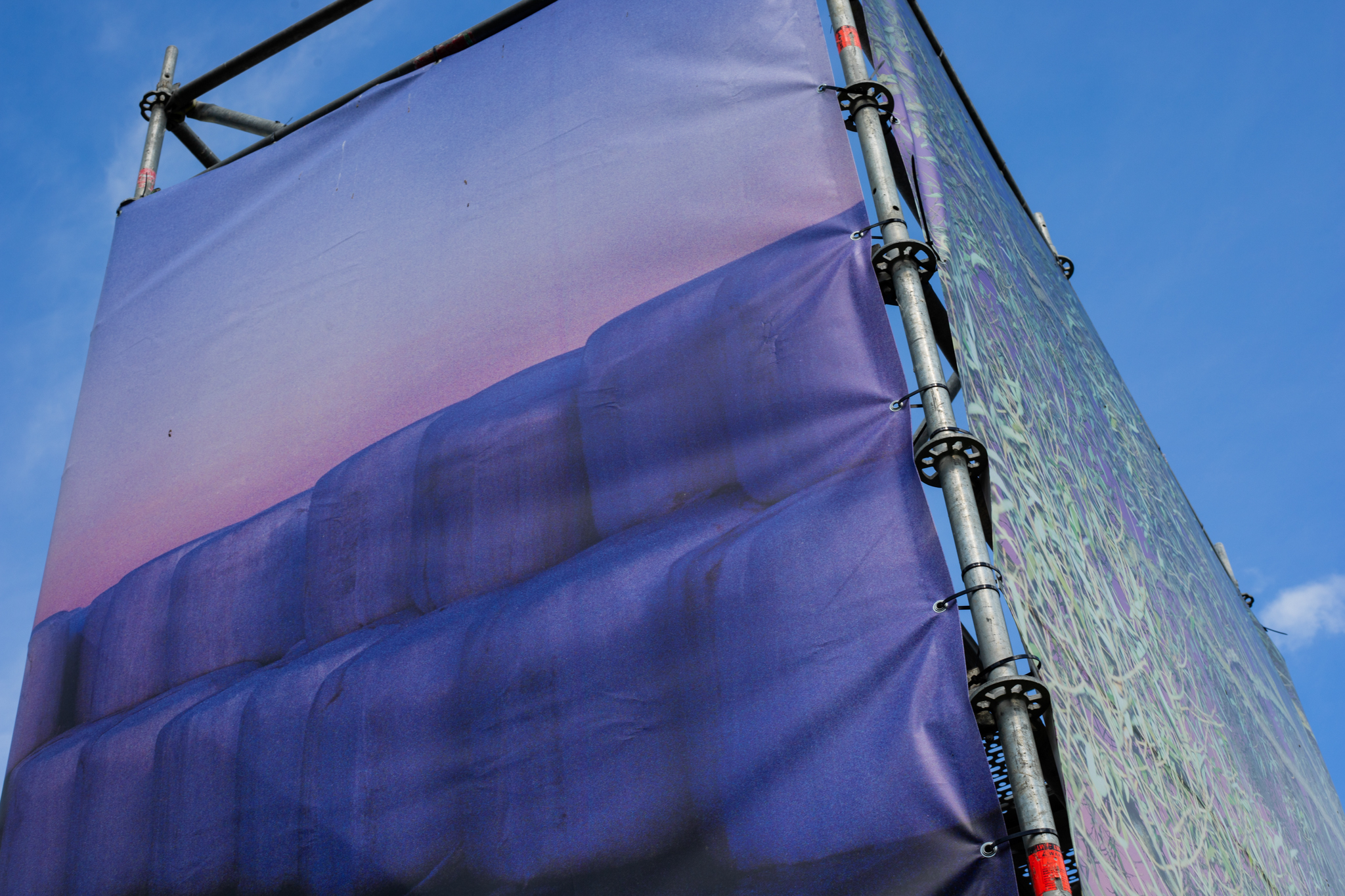
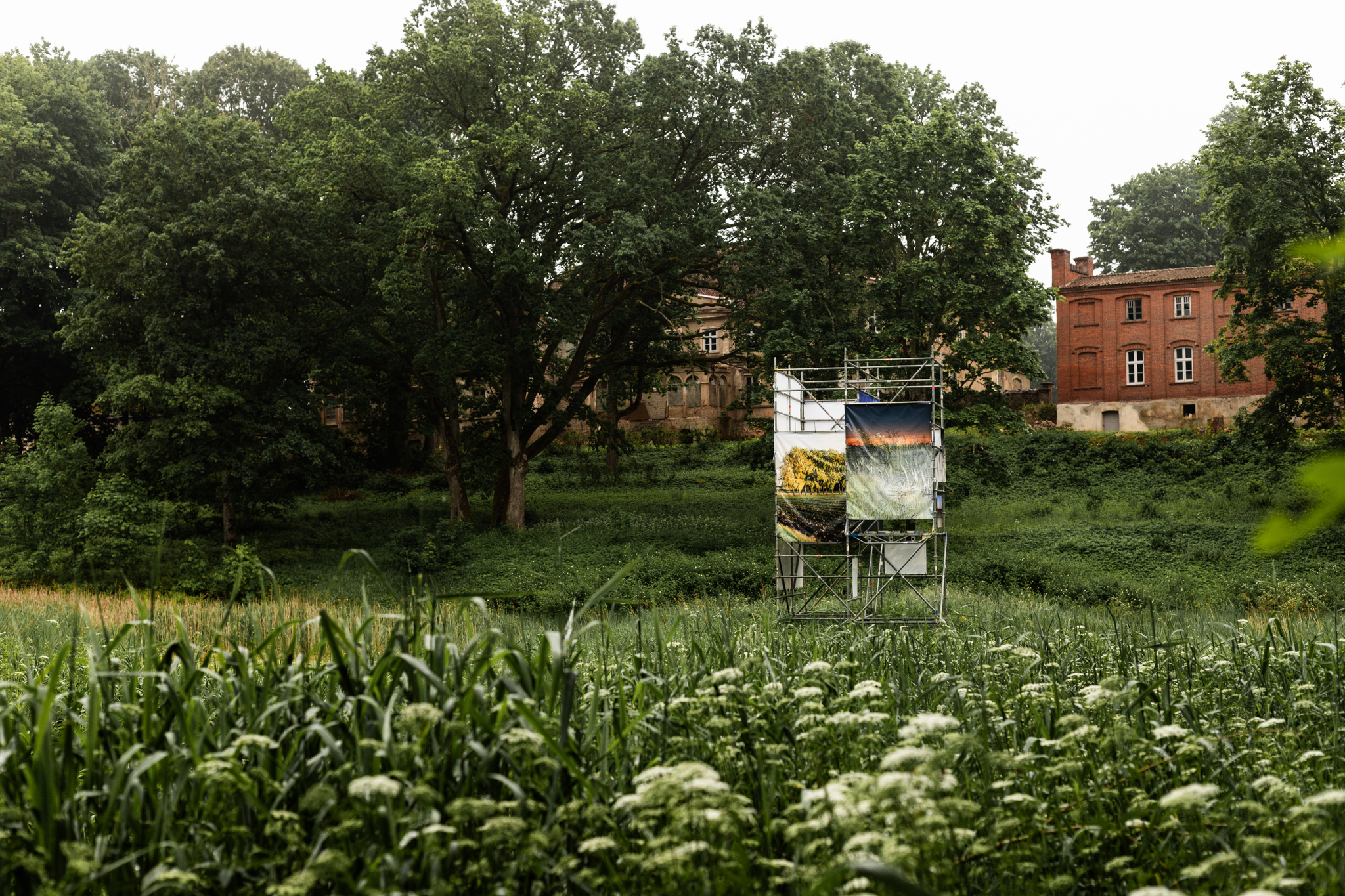
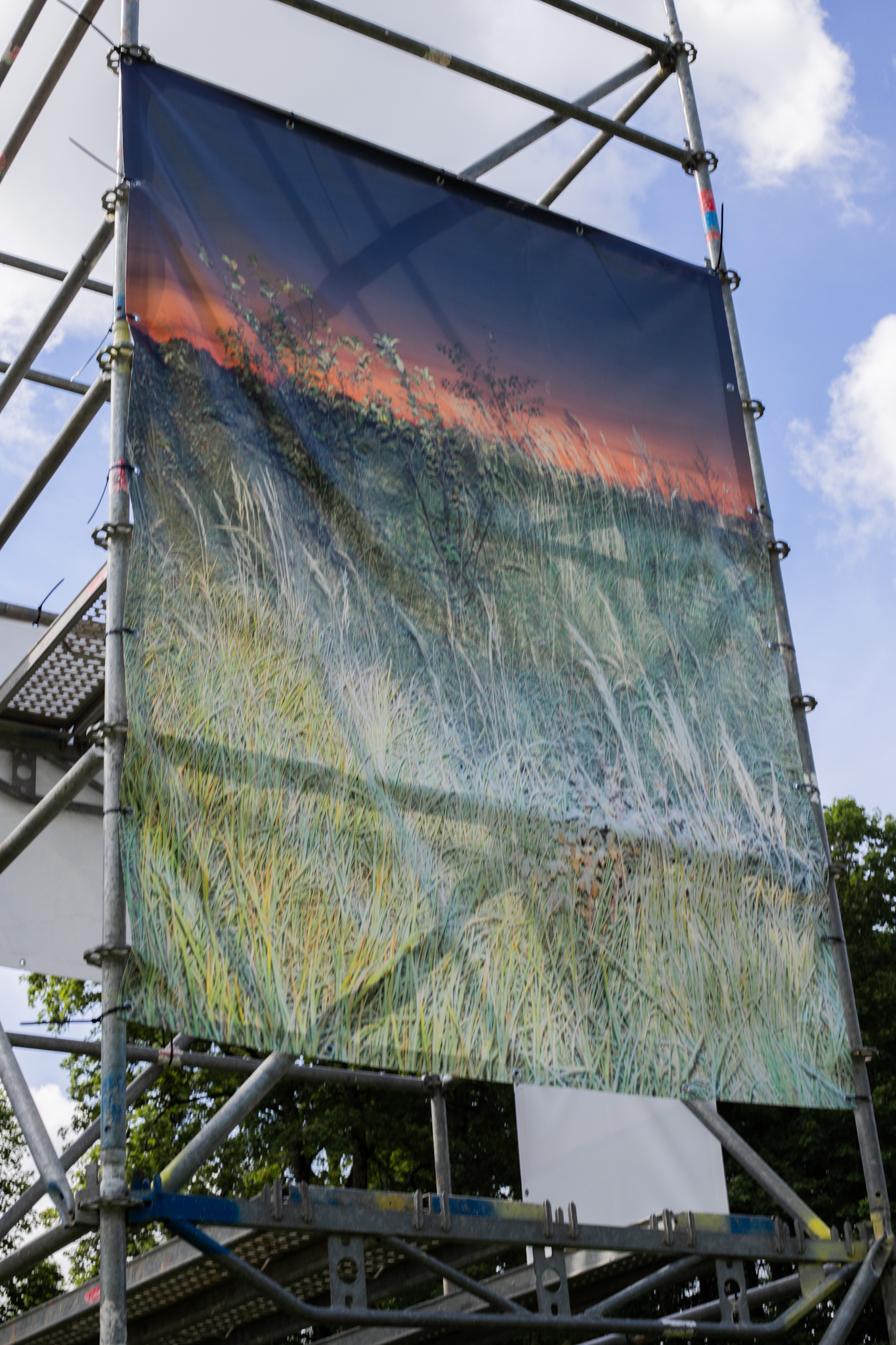
Pēteris Vīksna ‘Fields‘
Digital and analogue photography, digital print on PVC, scaffolding, 2025
On the peninsula of the Šķēde Manor mill pond
56°49’42.6″N, 22°24’07.5″E
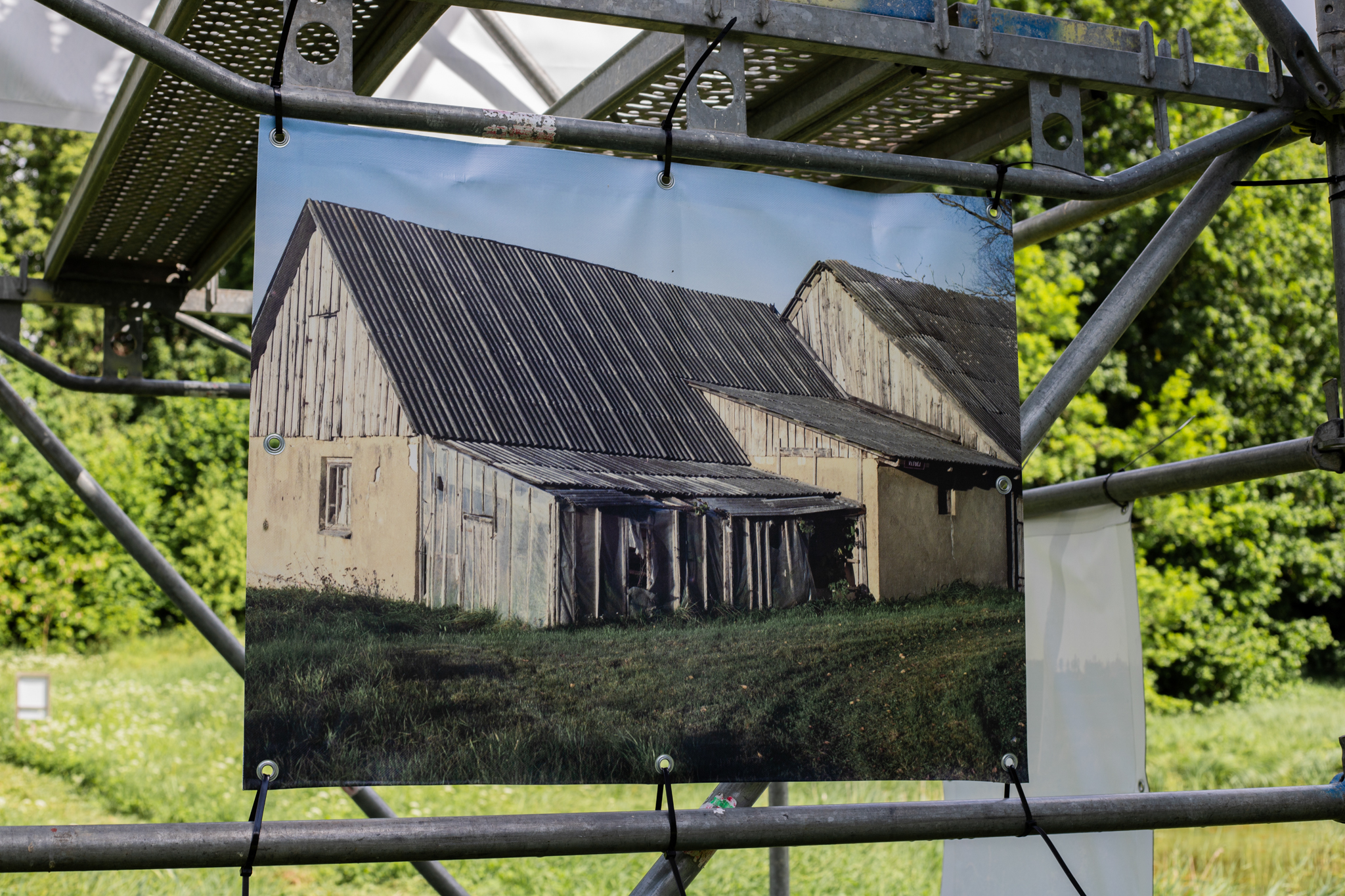
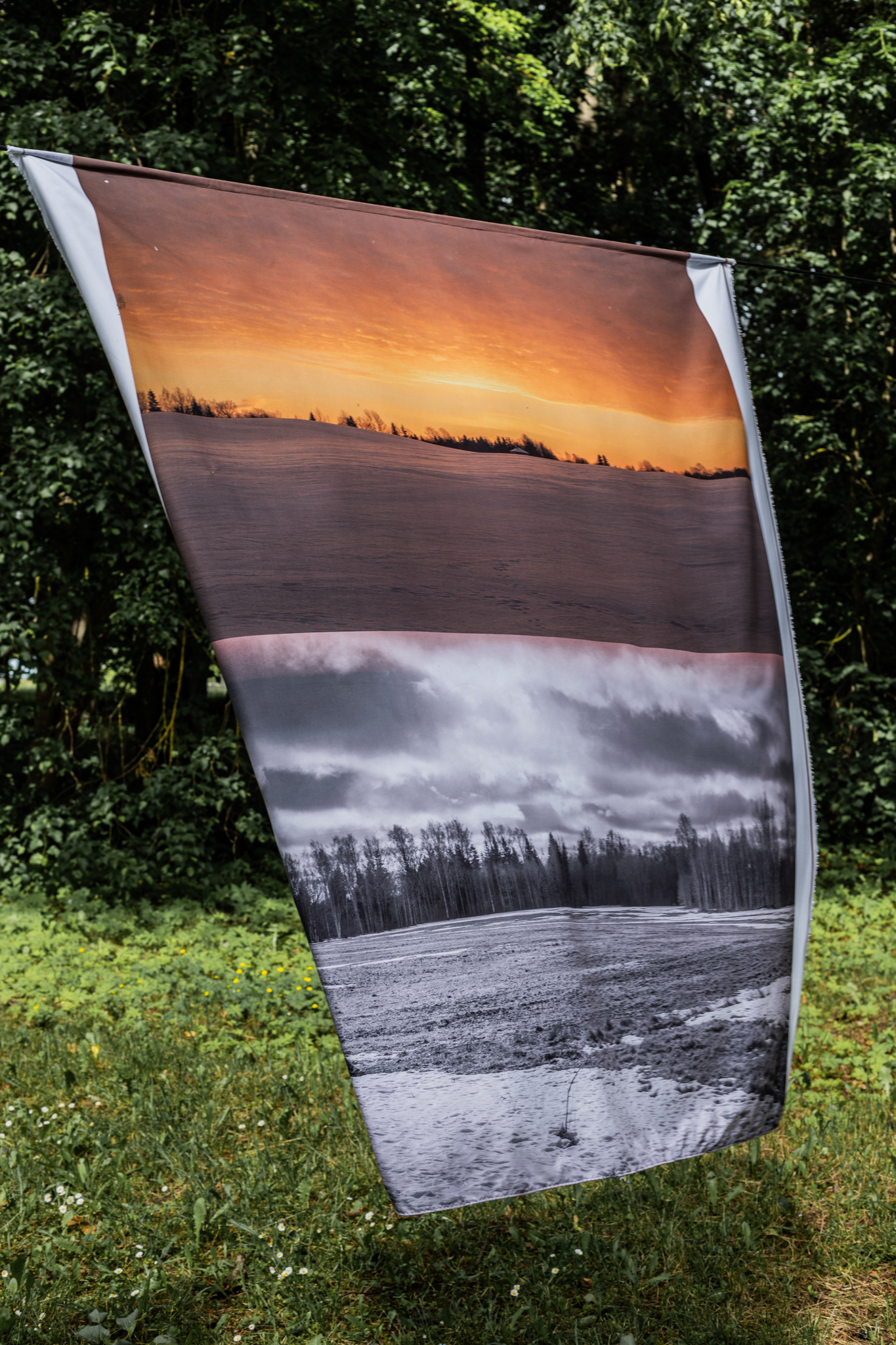
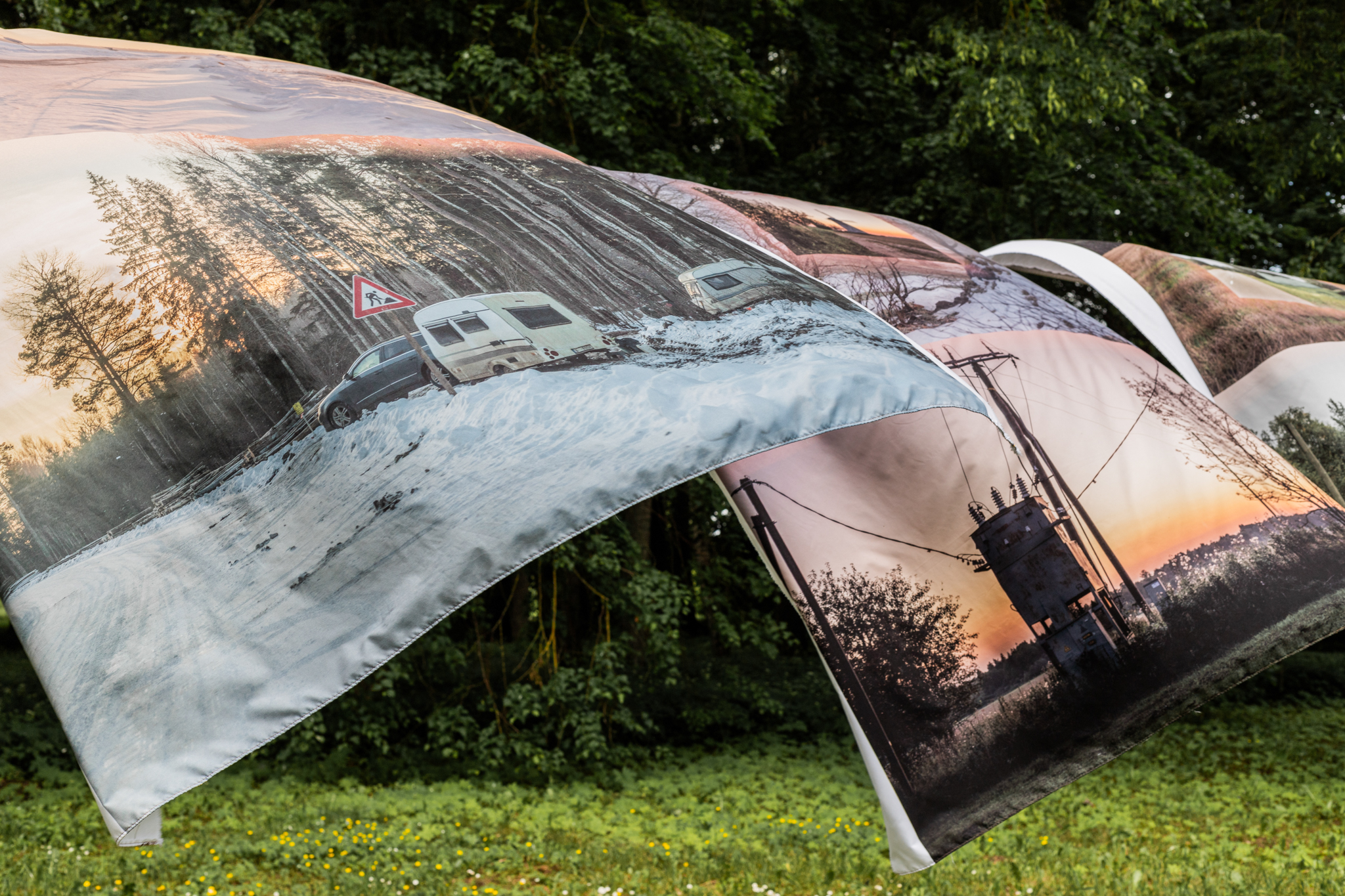
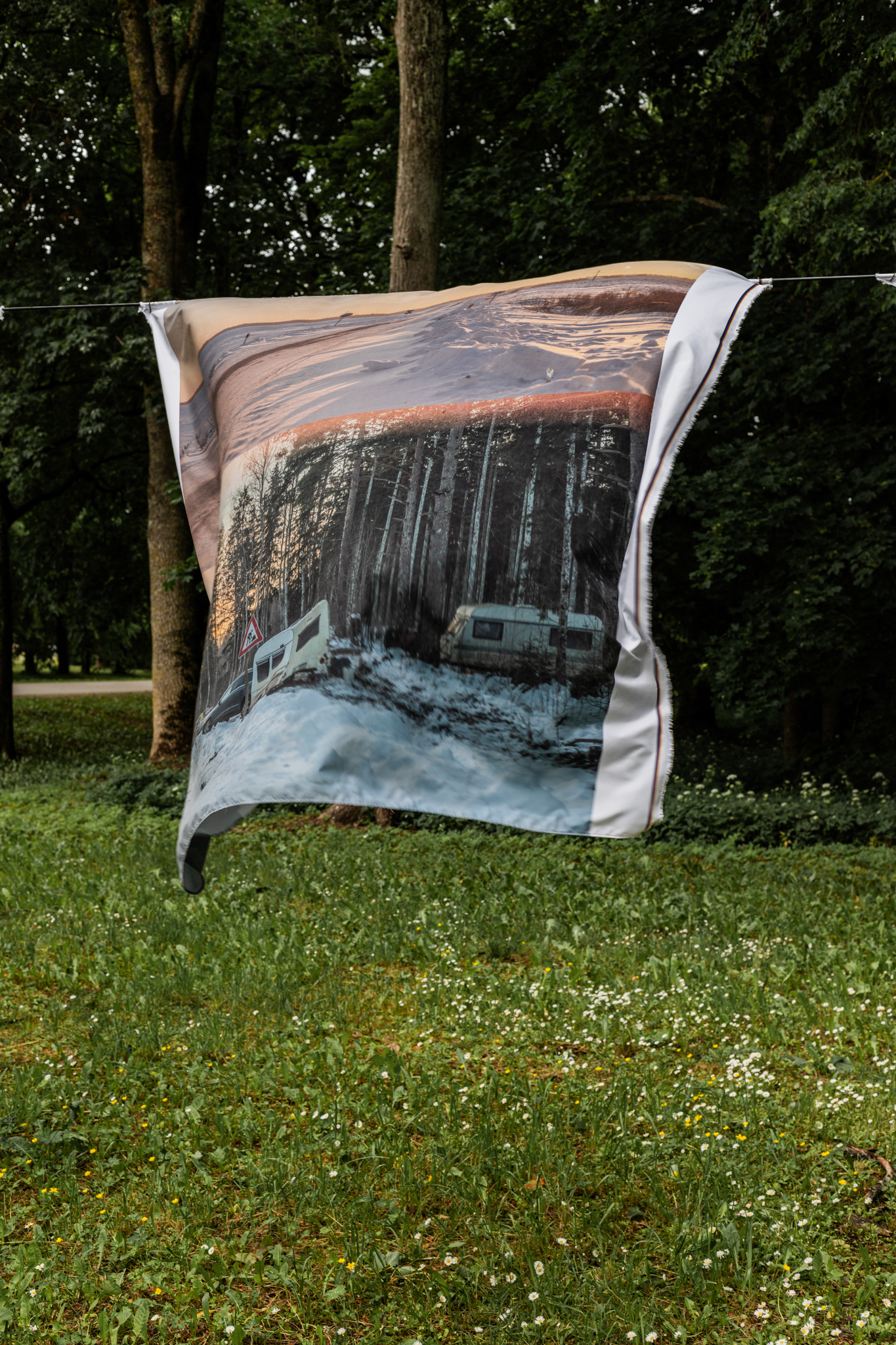
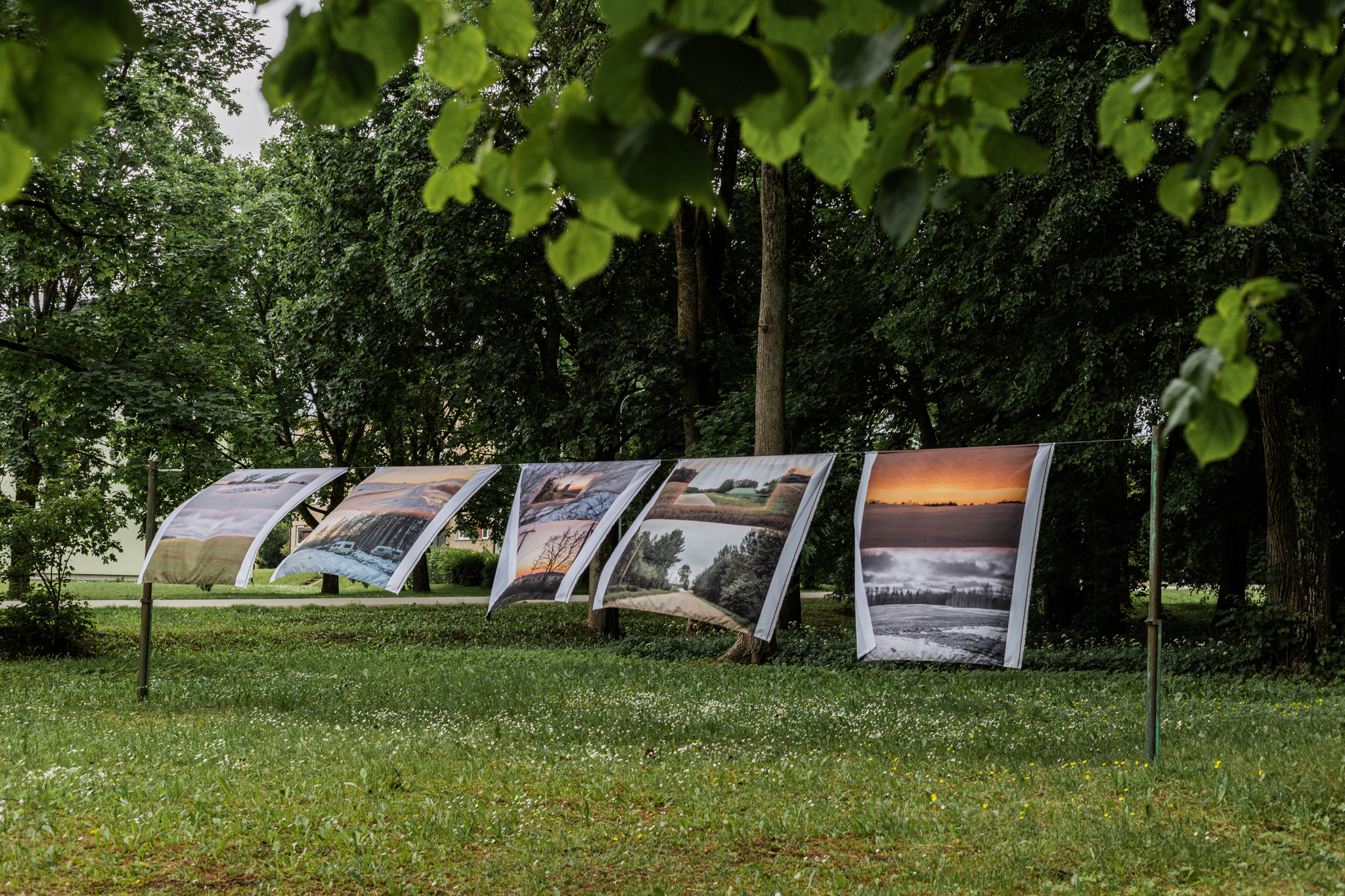
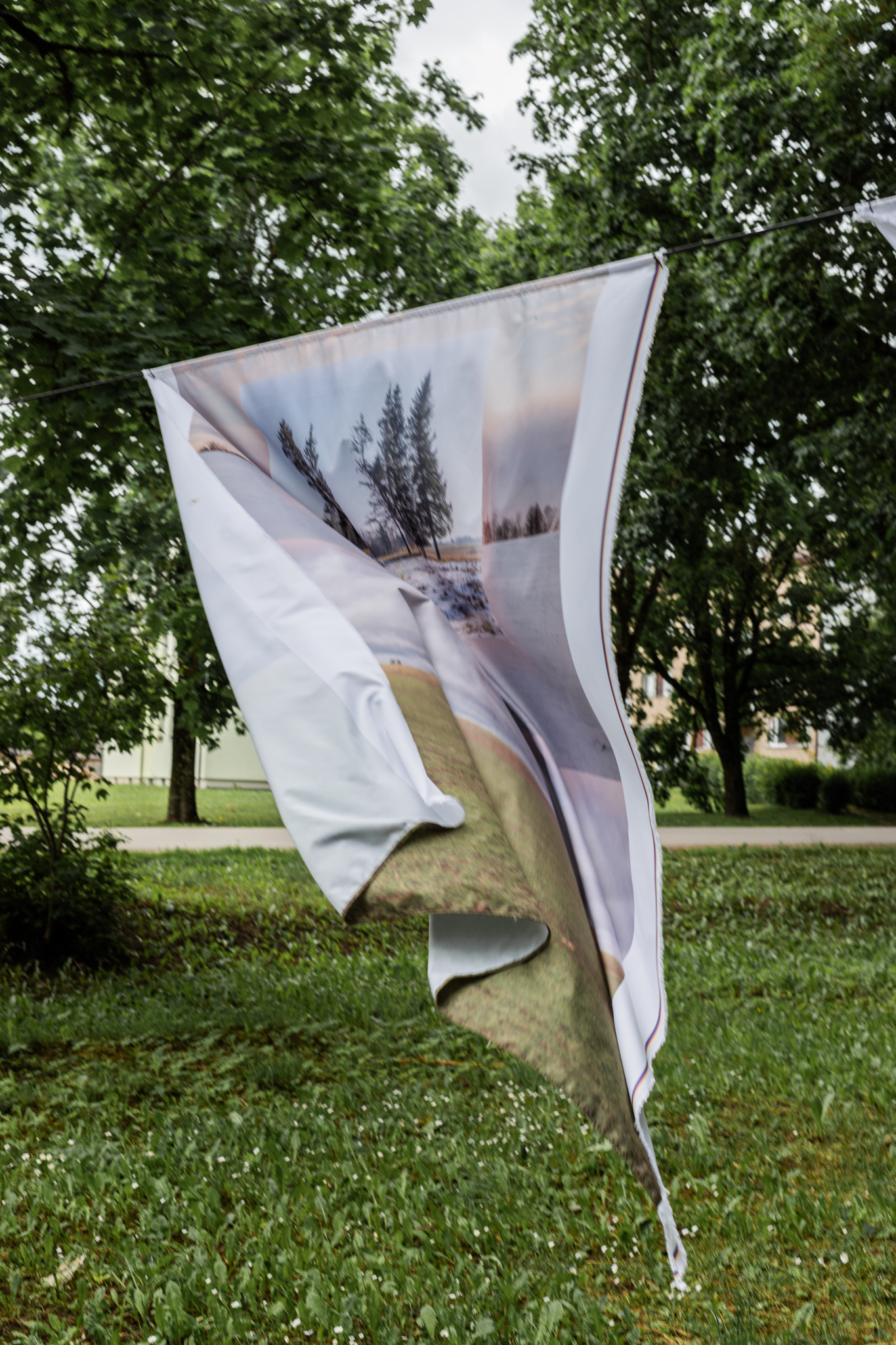
Annemarija Gulbe ‘Within the Landscape‘
Photography, sublimation print on recycled polyester, 2025–2026
Park of Jaunlutriņi Manor
56°49’42.6″N, 22°24’07.5″E
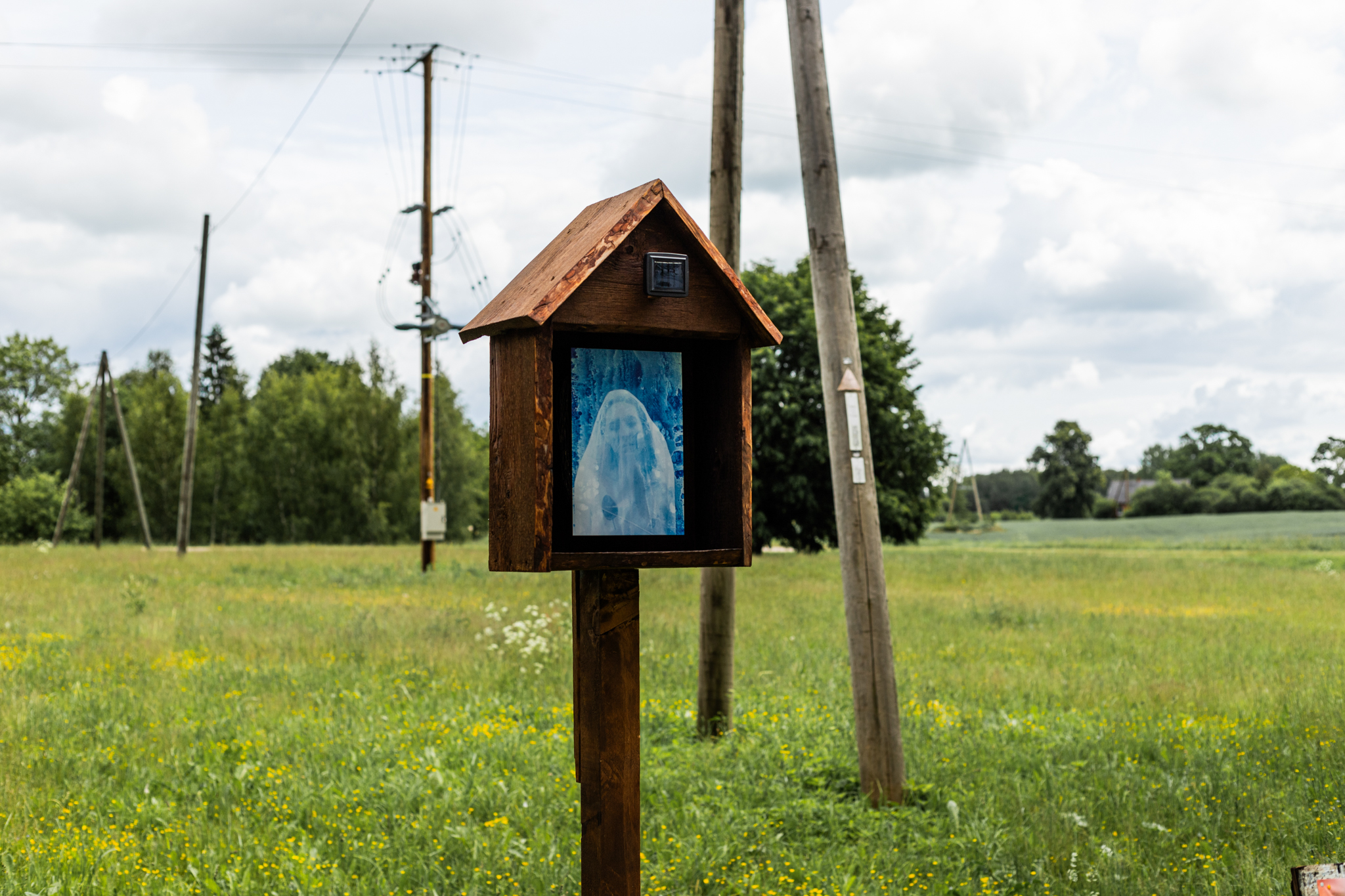
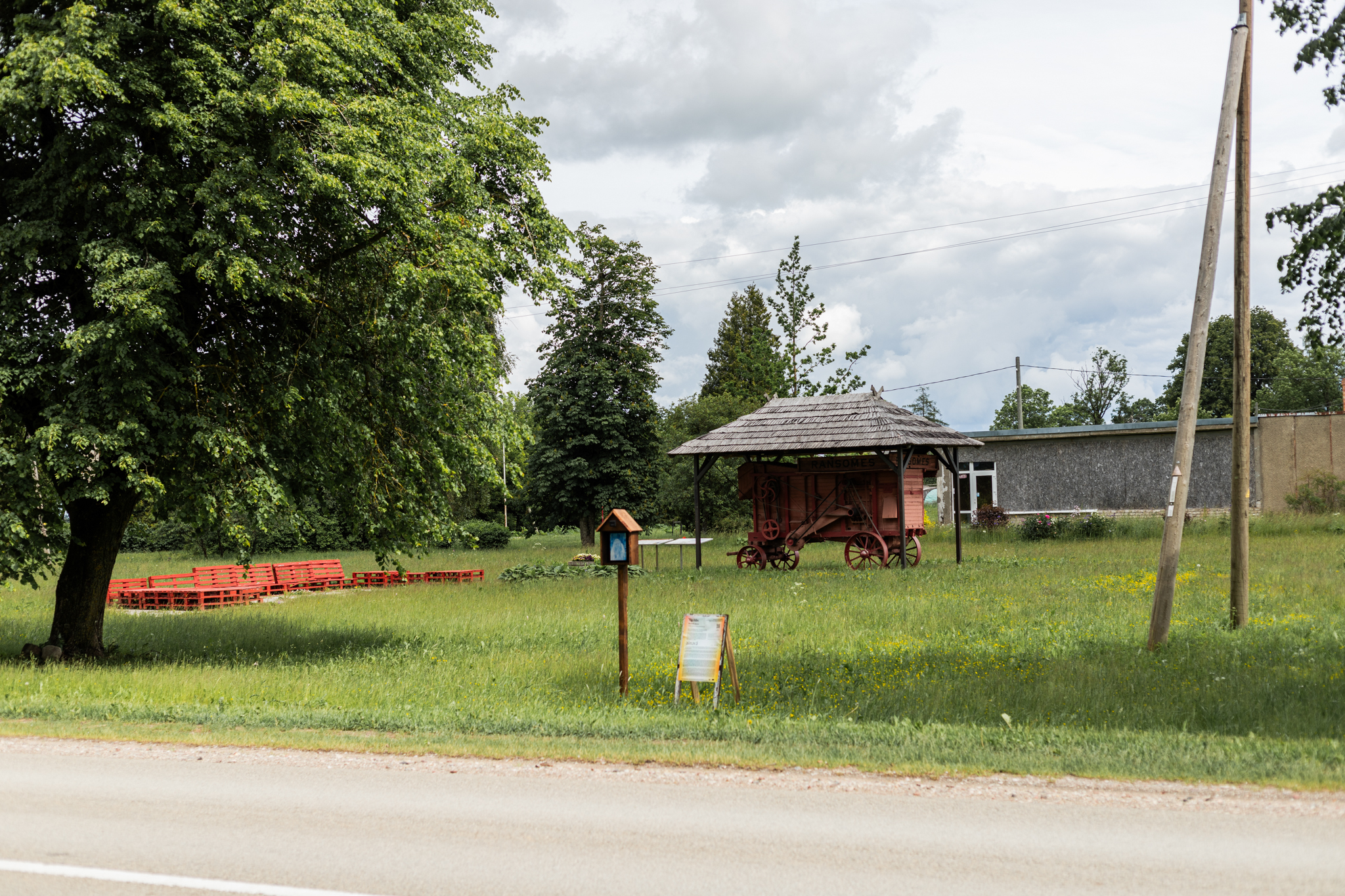
Līga Stibe ‘The Vanishing Landscape‘
Cyanotype, digital print on Neobond, wood, 2026
By Ošenieki threshing machine
56°48’30.6″N, 22°17’05.8″E
A Series of installations in Cultural and Historical Sites in Saldus Municipality, Western Latvia / KURZEME https://maps.app.goo.gl/bgjBsquHVxrr8Jv76
Curator, photography, text: Annemarija Gulbe
Produced by: KONTYNIUUM
Supported by: Saldus Municipality and the State Culture Capital Foundation of Latvia
Thanks: Ramirent; Frauenburg Industrie; the owners of Šķēde Manor.
Photography: Annemarija Gulbe

